Training
Training facilitators is the most fun! I particularly enjoy training people in their natural teams, so that they can agree how to use their skills and reinforce new practices after the formal learning is over.
Facilitation skills
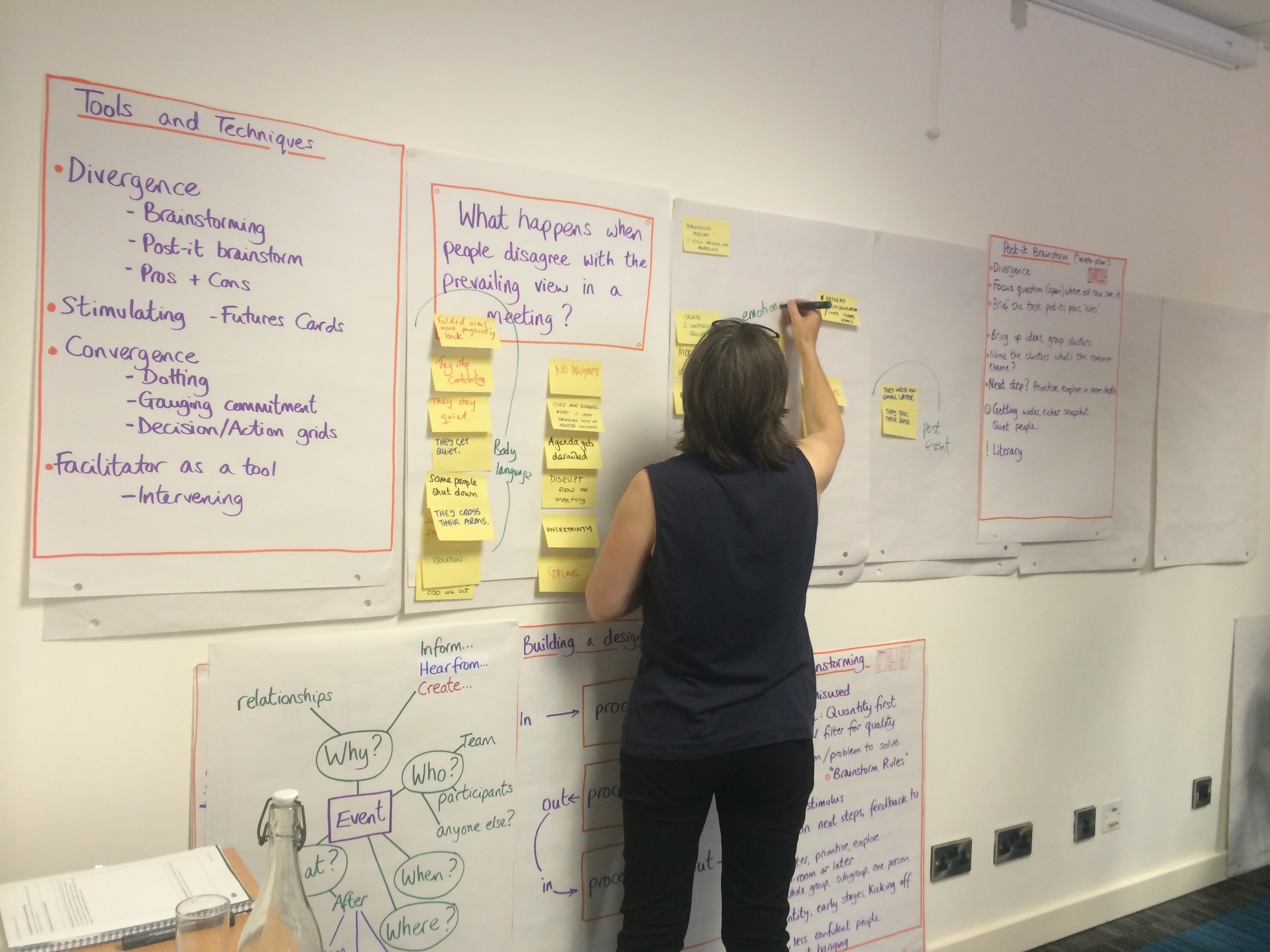
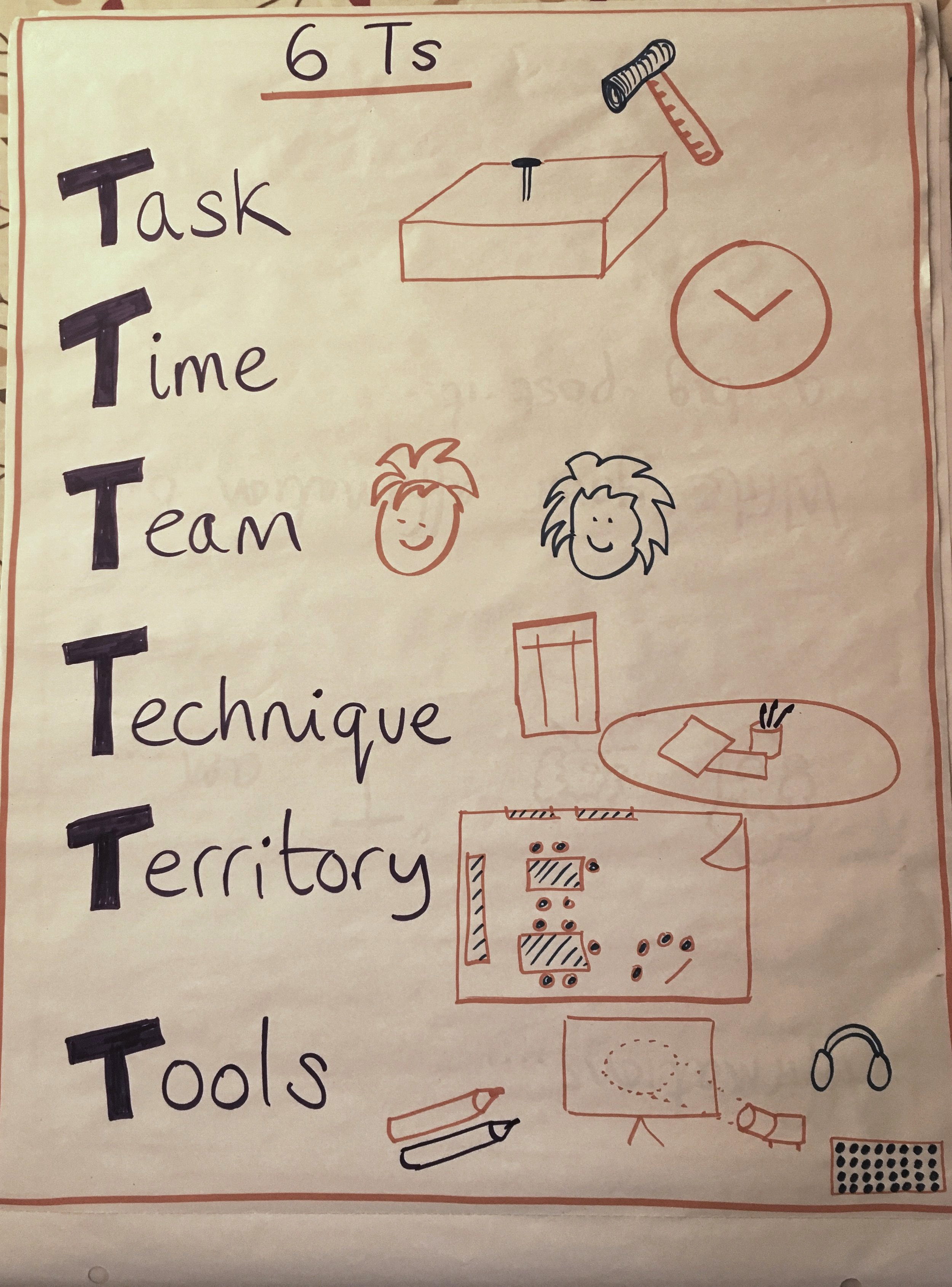
It's not just about techniques, although that's the bit that people often focus on first. They'd like to be able to run a world cafe, or a sticky-note brainstorm, or use polling in online meetings. In fact, facilitators help the group through:
Clarity on the purpose and aims of the meeting - helping the host, convenor, planning group be clear about these, ensuring the group is happy with them.
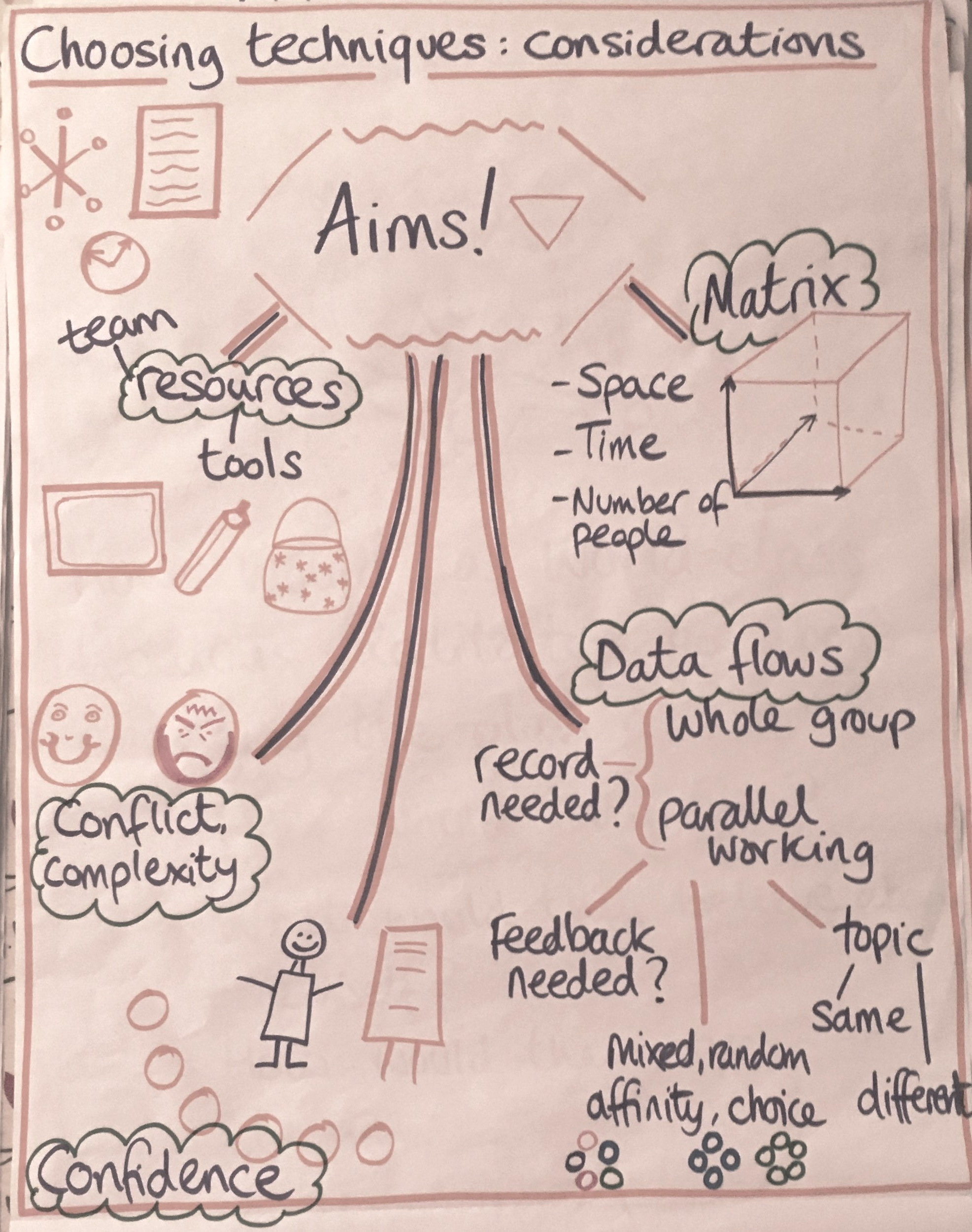
Choice of techniques, meeting design - to meet the aims, suit the time/space or platform/people.
Interpersonal skills - listening, reflecting, clarifying, responding, intervening to help the group hear and talk to each other, see what's happening and make choices about what to do.
Foundational and advanced Facilitation skills
I have designed and run three-day in-person facilitation skills courses for many NGOs and public bodies, in collaboration with other providers including 3KQ and Camilla Gordon. But maybe you need something more specific? Other bespoke courses include half-day masterclasses on turning your in-person workshop hybrid at short notice; improvising on-the-spot when things don’t go to plan; stakeholder mapping and analysis; difficult conversations with members of the public; sensitive facilitation for affinity groups as part of diversity, equity and inclusion initiatives (with Shilpa Shah).
I also run training and peer learning sessions professional facilitators wanting to stretch their practice, through the IAF and in other settings.
Collaborative working
There are some characteristic challenges when it comes to collaboration, and it can be very useful to know about them before you trip over them. Training for the Environment Agency focused on key concepts and ideas that became the basis for my book Working Collaboratively. I have designed and facilitated training programmes including
a one-day course for managers in a UK public body, on what they can do to support their teams who are collaborating,
two-day in-person courses for Environment Agency staff and their counterparts in other organisations which were convening and leading collaboration around water catchments (this two-day course ran five times),
a multi-strand intensive learning cohorts for people from businesses, public bodies and NGOs working to protect their communities from the impact of flooding, or to improve rivers and lakes. This progamme included: six half-day online sessions bringing together collaborators from different projects; team mentoring for each project; videos on key aspects of collaboration. With 3KQ.
Planning strategic engagement
Engaging stakeholders is not just a question of running a great participative workshop. There's a strategic planning side to it which is absolutely crucial if it's not to be a big waste of everyone's time. I've designed and run training for organisations including Defra, Sciencewise and the Environment Agency on planning stakeholder engagement.
A strategic approach to capacity building
Thinking about training and learning - capacity building - should always begin with the real-world outcomes: what do you want to achieve, as an organisation, that you're not achieving at the moment? You have an idea that facilitation skills or better strategic approach to engagement may be needed. But what, exactly, do people need to do differently, or more? In order to do those different things, or more of the good things, what specific skills and knowledge do which people need? (The other barriers to the changed behaviour may not be to do with skills or knowledge - they might be authority, or permission, or resources for example.) And then, in order to improve the right people's skills and knowledge, what's the best learning intervention. It may be that you don't yet know what it is that people need to do differently, in which case some consultative learning needs analysis, piloting, or emergent action learning may be needed.
One-to-one
Sometimes my clients haven't got a natural team to learn with - their organisation is too small or they are the only one who sees the need for the skills. So I've developed ways of supporting people in improving their facilitation skills one-to-one. This works particularly well when the client has opportunities to practice their facilitation between sessions.